CONTACT
 gallery
 facebook
 instagram
 youtube
 twitter
RUCOOL Deploys NSF-Funded Ocean Glider from Little Cayman in Partnership With CCMI
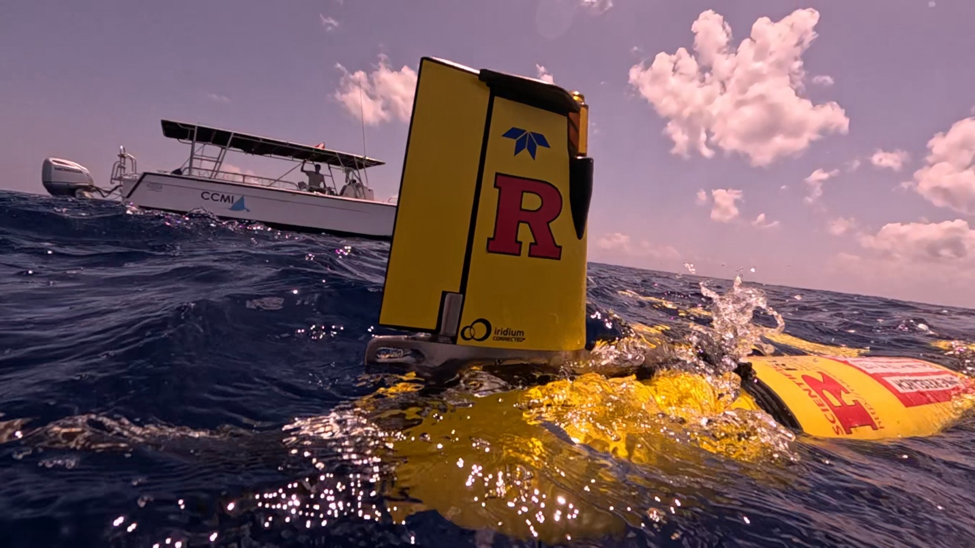
Rutgers University underwater glider RU37 is making its way northward through the Caribbean Sea toward Jamaica after being deployed last week by RUCOOL researchers in partnership with the Central Caribbean Marine Institute (CCMI) on Little Cayman.
The deployment is part of an NSF-funded effort (NSF OCE-2421622) to answer a surprisingly basic question about one of the world’s most important ocean corridors: we do not yet understand how water mixes as it flows through the Caribbean. Warm, salty water from the Atlantic enters the basin from the east, but by the time it exits into the Gulf of Mexico, it has changed considerably. The physical processes driving that transformation, how different water masses blend, stratify, and circulate across hundreds of miles of open ocean, remain poorly understood. This is one of four glider deployments that will collect the measurements needed to work out that physics.
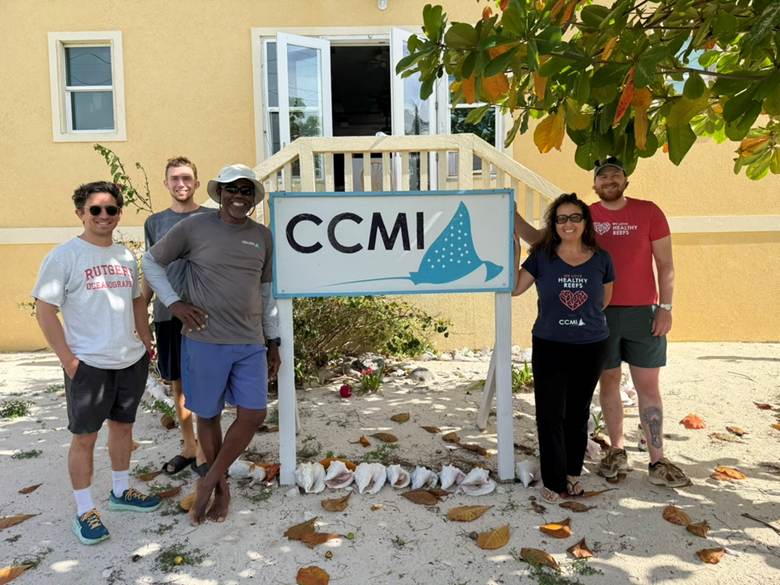
Assistant Research Professor Joe Gradone and marine technician Elliot Brown traveled to Little Cayman to launch the glider in the open water north of the island. The vehicle navigates autonomously, collecting detailed measurements of water temperature, salinity, and subsurface currents along its path. Those observations will help researchers reconstruct how water masses move and transform across the Caribbean basin, with direct implications for climate modeling and our understanding of large-scale ocean circulation.
During the trip, Gradone and Brown gave a talk to CCMI colleagues and visiting students from the College of Charleston, connecting them with a real, active ocean science mission unfolding right outside the institute’s door. The Rutgers team will return to Little Cayman in August to recover RU37, replace its batteries, and send it back out for a second leg of the mission.
The data RU37 collects matters on two fronts. First, the Caribbean is one of the most poorly observed stretches of open ocean on the planet, and measurements of how water masses from the Atlantic transform as they flow through this basin are essential for understanding large-scale ocean circulation and its role in global climate. Second, and more immediately, that same temperature and salinity data feeds into hurricane forecasting models. When a storm crosses this water, forecasters need to know how much heat is stored beneath the surface. RU37 is helping fill that gap, one dive at a time.
“The Caribbean is chronically under sampled, and that gap has real consequences,” said Joe Gradone. “Every profile RU37 collects as it transits toward Jamaica is a direct measurement from a part of the ocean that weather models largely have to guess at. When a hurricane crosses that water, forecasters need to know how much heat is stored beneath the surface, and right now we simply do not have enough observations to answer that confidently. This deployment starts to change that, one dive at a time.”
The project is led by Professor Travis Miles at Rutgers University, with co-investigators Ruoying He at North Carolina State University and Doug Wilson at the University of the Virgin Islands contributing modeling and additional glider observations across the region.