teacher resources
- reefs go live
- MINI-MODULES
- teacher training
- Additional resources
CCMI’s Education team is pleased to offer the following resources to educators to use in the classroom. Please contact us if you would like more information about the educational opportunities available at CCMI for you and your students.
2026 Reefs Go Live
2025 Reefs Go Live
2025 Reefs Go Live Activity Workbook (All episodes)
2025 Reefs Go Live Activity Workbook (Teacher’s Version)
March 21 – Lesson 1: Exploring the unknown ocean: Underwater mountains of Cayman
- Lesson Plan
- Student Worksheets
- Student Worksheets (Teacher’s Version)
- Expedition Hope mini-documentary
April 11 – Lesson 2: Cryptic creatures on the reef
2024 Reefs Go Live
2024 Reefs Go Live Activity Workbook (All Episodes)
March 22 – Lesson 1: Our Physical Ocean
April 12 – Lesson 2: Researching on the Reef: The Importance of Investigation
2023 Reefs Go Live
Reefs Go Live 2023 Booklet (all episodes)
March 31 – Finding Hope on Our Reefs
Student Worksheets (Teacher’s Version)
May 24 – Adaptation on Coral Reefs
June 2 – Reef Resiliency and Restoration
Student Worksheets (Teacher’s Version)
June 8 – World Ocean Day: 25 Years of Coral Reef Research at CCMI
Please note, all broadcasts begin at 10 am local time in the Cayman Islands (UTC -5).
2022 Reefs Go Live
Welcome to the Reef (25 March 2022)
Coral Bleaching and Disease (14 April 2022)
Healthy Reefs Over Time (26 May 2022)
World Ocean Day: Restoring Healthy Reefs for the Future (8 June 2022)
2021 Reefs Go Live
Quiet Oceans (26 March 2021)
Coral Reef Biodiversity (7 May 2021)
These modules are 3-5 minute video-based, mini-module lessons from CCMI that help educators deliver STEM curriculum to their year 4-6 students. Each mini-module is accompanied by a lesson plan that enhances the sharing of the information to the students and aims to increase retention of important content from Reefs Go Live.
Symbiotic Relationships Explained: Mutualism
This mini-module focuses on the Cayman Islands – Science National Curriculum objective of learning about symbiotic relationships, specifically mutualism.
LESSON PLAN: Symbiosis – Mutualism
Symbiotic Relationships Explained: Commensalism
This mini-module focuses on the Cayman Islands – Science National Curriculum objective of learning about symbiotic relationships, specifically commensalism.
LESSON PLAN: Symbiosis – Commensalism
Symbiotic Relationships Explained: Parasitism
This mini-module focuses on the Cayman Islands – Science National Curriculum objective of learning about symbiotic relationships, specifically parasitism.
LESSON PLAN: Symbiosis – Parasitism
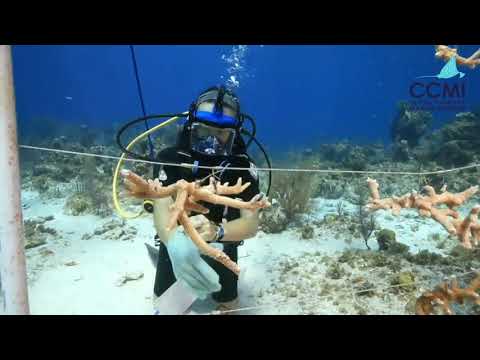
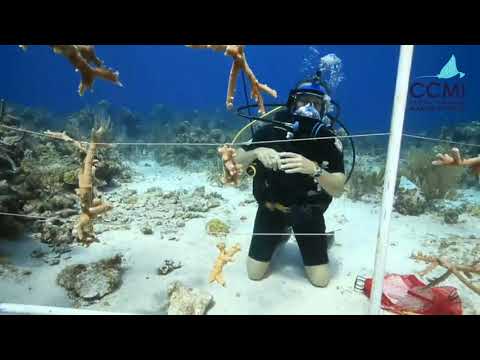
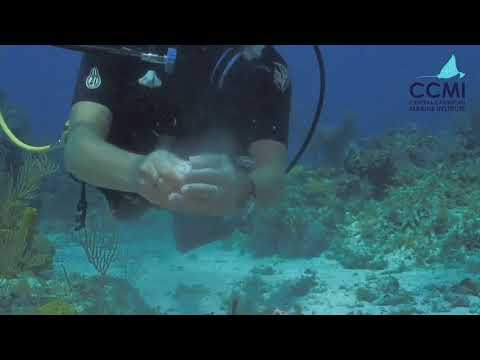
How Do Scientists Grow Corals? – Frame Cleaning
This mini-module focuses on the Cayman Islands – Science National Curriculum objective of learning about what plants and animals need to grow, how they feed, how they move, use their senses, and the similarities and differences between them. Learn all about this through the live underwater examples of stony corals and their mutualistic, symbiotic relationship with an algae living inside of them.
LESSON PLAN: How do Scientists Grow Coral – Frame Cleaning
How Do Scientists Grow Corals? – Measuring Corals
This mini-module focuses on the Cayman Islands – Science National Curriculum objective of learning about what plants and animals need to grow, how they feed, how they move, use their senses, and the similarities and differences between these types of organisms. This module also meets the learning objectives of the STEM, year 4-6 mathematics requirement of using basic tools to take a length measurement, adding each of those measurements together, and forming a summation or total. Learn all of this through the live underwater examples of stony corals and their mutualistic, symbiotic relationship with an algae living inside of them.
LESSON PLAN: How do Scientists Grow Coral – Measuring Coral
How Do Scientists Grow Corals? – Outplanting
This mini-module focuses on the Cayman Islands – Science National Curriculum objective of learning about what plants and animals need to grow, how they feed, how they move, use their senses, and the similarities and differences between them. Learn all of this through the live underwater examples of outplanting stony corals back onto the natural coral reef ecosystem. (This video is 9-minutes long.)
LESSON PLAN: How do Scientists Grow Coral – Outplanting Coral
CCMI has created video-based resources to train and prepare educators to deliver STEM curriculum to their year 4-6 students. Each training video is accompanied by a lesson plan that enhances the sharing of the information to the students and aims to increase retention of important content from Reefs Go Live.
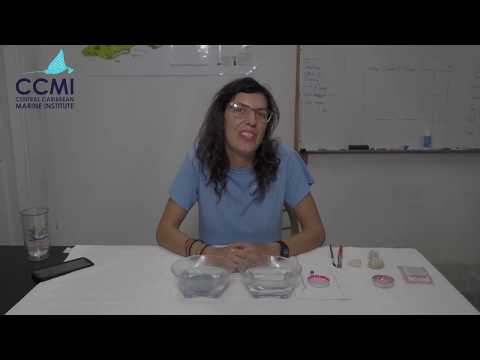
Teacher Training Video: Coral Bleaching
This experiment introduces coral bleaching and how it can have a negative impact on coral reef ecosystems. Teachers will be guided through how to undertake a simple coral bleaching experiment with their students by a CCMI educator. Background information on coral bleaching and its causes will also be provided in the training video.
LESSON PLAN: Coral Bleaching
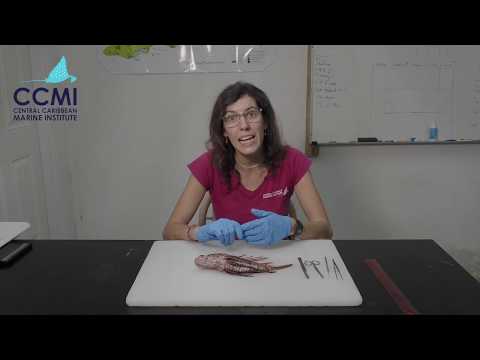
Teacher Training Video: Lionfish Dissection
This experiment introduces the concept of an invasive species, using lionfish in the Caribbean as an example, and explains how invasive species can have negative impacts in an ecosystem. Teachers will be guided through how to undertake a simple lionfish dissection with their students by a CCMI educator. Background information on invasive species, the causes of the lionfish invasion in the Caribbean and lionfish biology are also provided. Teachers undertaking this experiment are encouraged to follow up with a class discussion focusing on what other invasive species are found in the Cayman Islands and how we can reduce their population.
LESSON PLAN: Lionfish Dissection
Teacher Training: Ocean Acidification
This experiment introduces ocean acidification and how it can negatively impact marine organisms. Teachers will be guided through conducting a simple ocean acidification experiment with their students by a CCMI educator. Background information on ocean acidification will also be provided in the training video. Teachers undertaking this experiment are encouraged to follow up with further experiments to determine the pH of common solutions to allow students to have a greater understanding of the pH scale.
LESSON PLAN: Ocean Acidification
These lesson plans complement CCMI’s Reefs Go Live programmes (2019-2020), which are aligned with the Science National Curriculum objective for Years 4, 5, and 6 in the Cayman Islands government schools. Participation in the live dive broadcasts and use of these lessons is open to all teachers in Cayman, regardless of age and subject matter taught. In fact, Reefs Go Live offers great cross-curricular opportunities to engage students in coral reefs as a real-life platform for teaching in other subject areas such as math and writing. All episodes are about 45 min in length. Episodes can be found here.
lesson plans
activity sheets
These activity sheets are designed to enhance the Reefs Go Live broadcasts and engage students in active observation and understanding of the lessons presented by CCMI underwater educators and scientists.
fact sheets
The fact sheets have been put together to provide additional information about topics discussed in the Reefs Go Live broadcasts.
lesson slides
Students learning about Caribbean algae and herbivorous fish identification can refer to the two education module slide decks below on algae and herbivorous fish in Little Cayman. These have been created by CCMI researchers and educators based upon the Darwin Initiative-supported project on key herbivores in the Cayman Islands. These education modules also air with the Reefs Go Live video, activity sheets, and fact sheets on herbivory. Learn more about that project here.